Why Eastern Europe Leads Software Outsourcing in 2025
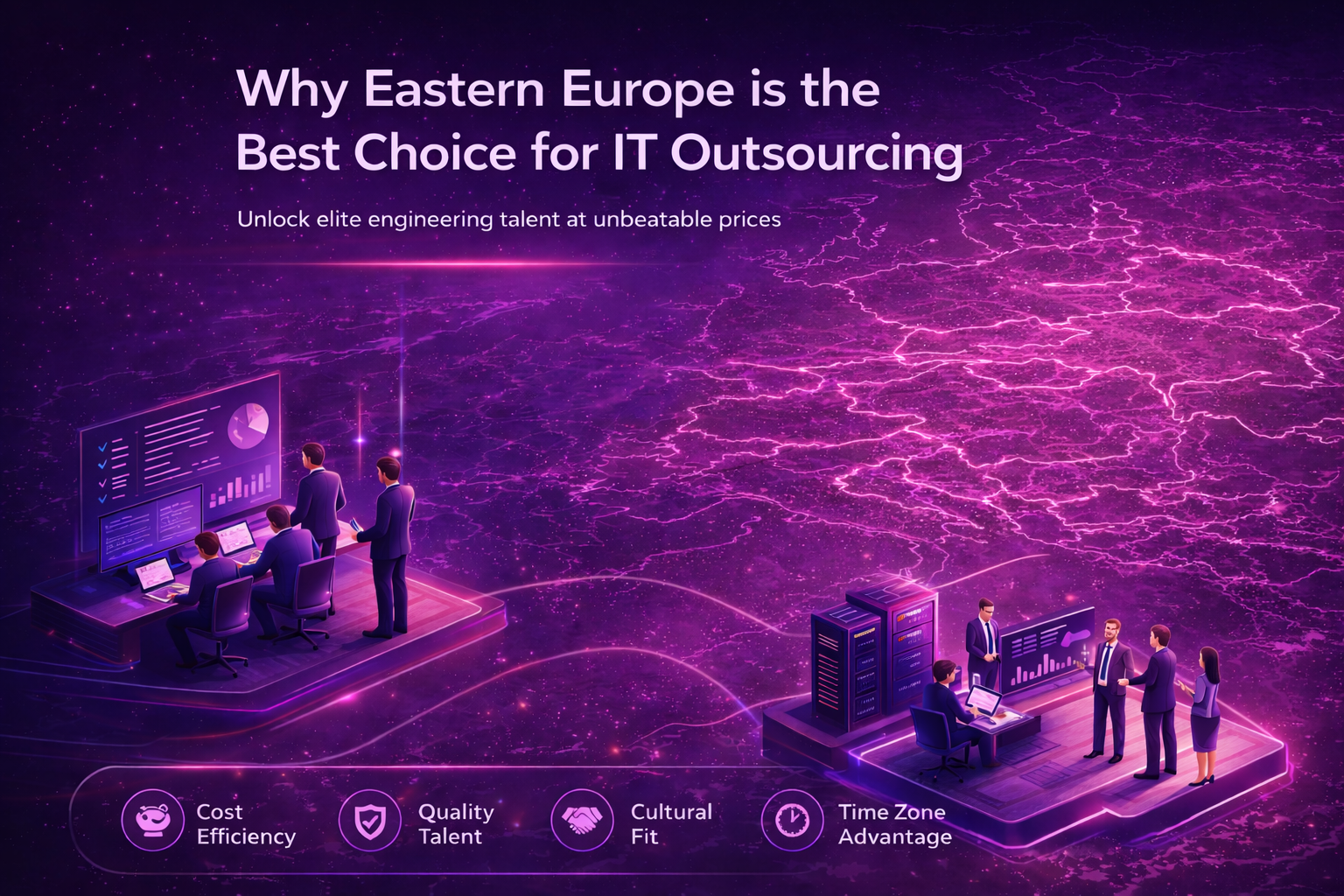
Software development outsourcing in Eastern Europe has become the strategic choice for CTOs navigating talent shortages and budget constraints. The region combines technical excellence with proximity to Western markets, offering what offshore destinations cannot match: timezone alignment, cultural compatibility, and EU regulatory compliance.
Companies pursuing Eastern Europe outsourcing software development gain access to 1.3 million IT professionals across countries like Poland, Romania, Ukraine, and Bulgaria. These markets deliver 40-60% cost savings compared to Western Europe while maintaining comparable quality standards. The region's universities graduate 500,000+ STEM students annually, creating a continuously replenished talent pipeline that offshore alternatives struggle to replicate.
What Makes Eastern Europe Different from Offshore Alternatives?
Eastern European software development outsourcing operates within a fundamentally different framework than Asian offshore centers. The region sits in CET/EET time zones (UTC+1 to UTC+3), enabling real-time collaboration with London, Berlin, and Paris-based teams. Development cycles accelerate when daily standup meetings don't require 4 AM wake-up calls or waiting 12 hours for code reviews.
EU membership in countries like Bulgaria, Poland, and Romania enforces GDPR compliance as a legal obligation rather than voluntary certification. Financial services and healthcare companies processing sensitive data find that this regulatory alignment reduces compliance overhead by 30-40% compared to managing third-country data transfers. SEPA integration enables same-day EUR payments without wire transfer delays or currency conversion losses.
Cultural alignment manifests in communication patterns that technical teams recognize immediately. Eastern European developers adopt Agile methodologies, use similar project management tools (Jira, Confluence, GitLab), and understand the Western business context without extensive onboarding. The shared European business culture eliminates misunderstandings that commonly derail offshore projects around work expectations, deadline interpretation, and quality standards.
How Does Bulgaria Stand Out in Eastern Europe?
Bulgaria represents Eastern Europe's outsourcing of software development at its most competitive. The country's 10% flat corporate tax rate - the EU's lowest - combines with developer salaries 35-45% below Western European levels. A senior Java developer in Sofia costs €35,000-45,000 annually versus €70,000-90,000 in Munich or Amsterdam, delivering identical technical output.
The talent density in Sofia and Plovdiv exceeds that of many larger Eastern European capitals. Bulgaria produces 5,000+ IT graduates yearly from universities emphasizing Java, Python, JavaScript, and C++. Major tech companies including VMware, SAP, and Cisco, operate development centers in Bulgaria, training professionals to Western enterprise standards before they enter the broader market.
Bulgaria's EU membership since 2007 provides structural advantages that competitors cannot replicate. Companies establishing Bulgarian entities can access EU banking infrastructure, participate in Horizon Europe research programs, and hire talent visa-free from all 27 member states. The regulatory environment enforces the same data protection, labor laws, and IP protections that govern operations in Frankfurt or Stockholm.
Why Do CTOs Choose Software Development Outsourcing in Eastern Europe?
Technical decision-makers pursuing software development outsourcing eastern europe prioritize three factors: talent quality, operational efficiency, and risk mitigation. Eastern European developers average 5-8 years of professional experience, versus 2-4 years common in rapidly scaling Asian tech hubs. This experience translates to fewer production bugs, more maintainable code architecture, and realistic project estimations.
The region's established IT infrastructure supports distributed development without compromise. Internet connectivity averages 200+ Mbps in major cities, coworking spaces offer enterprise-grade facilities, and English proficiency among technical staff exceeds 85%. Development teams operate on fiber connections comparable to Silicon Valley rather than dealing with bandwidth limitations that plague some offshore locations.
Risk factors that concern CFOs decrease substantially with Eastern European partners. Political stability across EU member states, transparent legal systems, and membership in international IP treaties protect intellectual property. Contract disputes are resolved through familiar European legal frameworks rather than navigating foreign arbitration systems. Currency risk is minimized when contracts are denominated in EUR rather than dealing with volatile emerging market currencies.
See how companies leverage our Eastern European expertise to build world-class software solutions.
"They were very responsive to our needs and requests."

"They're responsive, well-organized, and proactive in identifying and resolving potential risks early."

"Their team showed a high level of expertise."

"The team consistently demonstrated a solutions-oriented mindset."

"Their technical proficiency is exceptional, coupled with a deep understanding of client requirements."

"They possess outstanding technical expertise."

"What I found most impressive about this company was its partnership approach."

"They were very responsive to our needs and requests."
"They're responsive, well-organized, and proactive in identifying and resolving potential risks early."
"Their team showed a high level of expertise."
"The team consistently demonstrated a solutions-oriented mindset."
"Their technical proficiency is exceptional, coupled with a deep understanding of client requirements."
"They possess outstanding technical expertise."
"What I found most impressive about this company was its partnership approach."
Ready to discuss your project? Let's explore how our Eastern European team can help you achieve your goals.
What Cost Savings Should You Expect?
Eastern europe software development outsourcing delivers measurable financial impact beyond hourly rate comparisons. A typical enterprise development team (5 developers, 1 QA engineer, 1 project manager) costs €35,000-40,000 monthly in Bulgaria versus €85,000-95,000 for equivalent Western European talent. Annual savings of €600,000+ enable companies to expand team capacity by 60% within the same budget.
Total cost of ownership extends beyond salaries to operational expenses. Office space in Sofia costs €15-20 per square meter monthly compared to €40-60 in Western capitals. Employment taxes average 30-32% in Bulgaria versus 45-55% in Germany or France. Infrastructure costs including internet, utilities, and equipment drop 40-50%, compounding the salary differential.
The cost-quality ratio particularly favors Bulgaria within Eastern Europe. While Poland and Czech Republic offer comparable talent, Bulgarian rates remain 15-20% lower while maintaining equivalent certification levels. ISTQB-certified QA engineers, AWS-certified cloud architects, and Oracle-certified database administrators command Western rates in Warsaw but remain cost-competitive in Sofia.
How Do You Evaluate Eastern European Development Partners?
Assessing software outsourcing Eastern Europe providers requires examining specific qualification markers. ISTQB certification rates above 40% within QA teams indicate structured testing methodologies rather than ad-hoc approaches. ISO 27001 certification demonstrates information security management systems meeting international standards—critical for processing customer data or intellectual property.
Client portfolio analysis reveals sector specialization that matches your requirements. Fintech projects demand PCI DSS compliance experience, healthcare systems require HIPAA familiarity, and SaaS platforms benefit from cloud-native architecture expertise. Providers should demonstrate 3-5 year client relationships rather than transactional project-based engagement patterns that suggest retention issues.
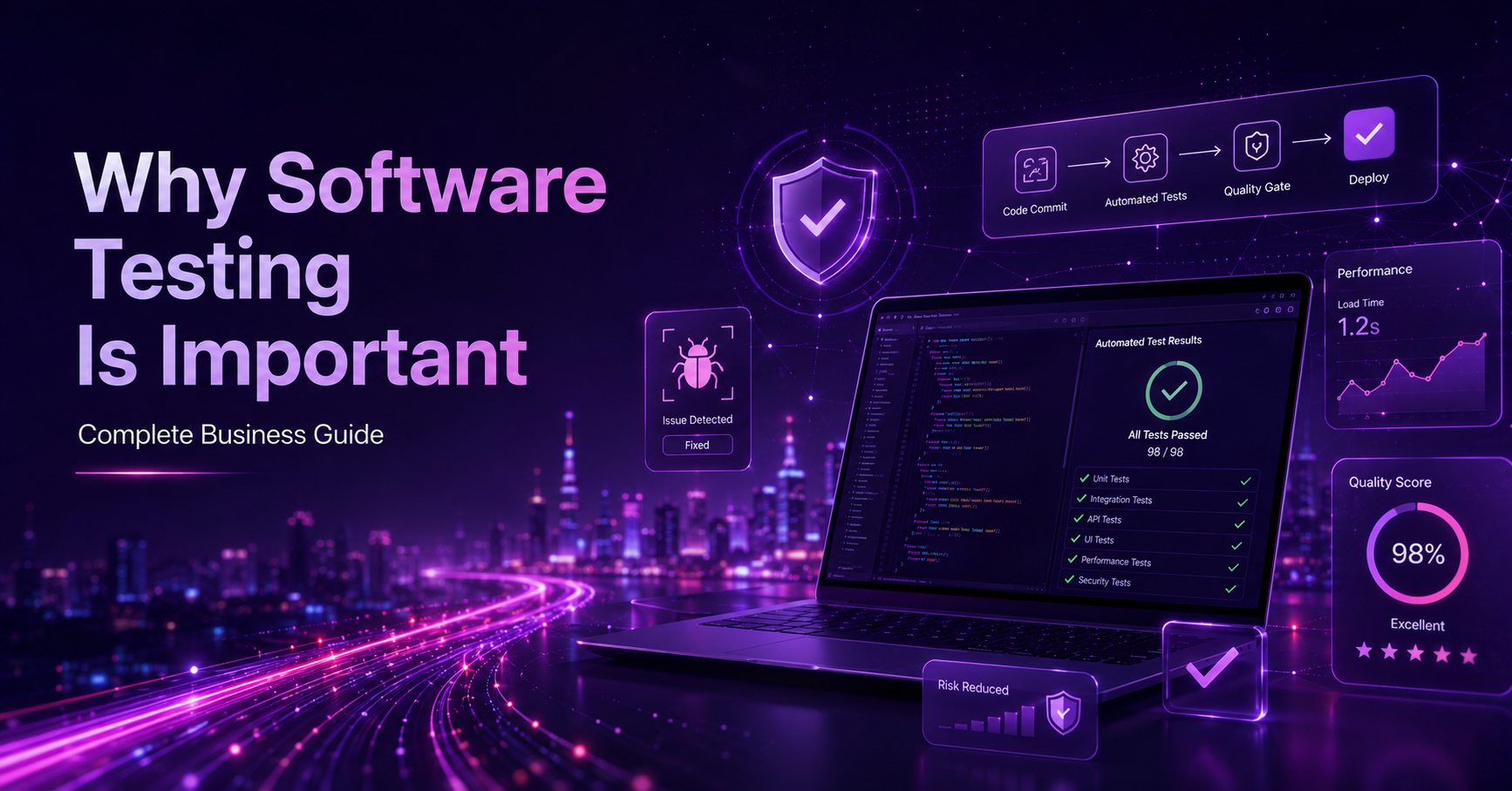
Technical assessment methodologies separate competent providers from mediocre alternatives. Request architecture review of their flagship projects, examine code repositories for documentation quality and test coverage, and evaluate their CI/CD pipeline maturity. Teams practicing infrastructure-as-code, automated testing, and proper version control deliver predictable results. Teams lacking these fundamentals create technical debt regardless of hourly rates.
What Implementation Timeline Should You Plan?
Eastern europe outsourcing software development projects launch faster than traditional recruitment. Established providers with pre-vetted talent pools assemble development teams within 2-3 weeks versus 3-6 months for hiring in-house developers. The accelerated timeline includes matching technical skills to requirements, conducting interviews, and provisioning development environments.
Onboarding efficiency depends on provider maturity and your preparation. Teams familiar with Western enterprise processes require minimal handholding beyond domain knowledge transfer. Allocate 2-3 weeks for knowledge transfer, tool access provisioning, and codebase familiarization. Initial sprint velocity typically reaches 70% of steady-state productivity, climbing to full capacity by sprint three.
Contract structures in Eastern European markets favor flexibility over rigid offshore models. Time-and-materials agreements allow scope adjustments as requirements evolve, while dedicated team models provide consistent capacity without per-project renegotiation. Notice periods typically span 30 days, enabling faster scaling than six-month contract locks common in Asian outsourcing.
Common Questions About Software Outsourcing Eastern Europe
How do communication and timezone differences affect project delivery?
Eastern Europe operates within 1-2 hours of Central European Time, enabling 6-8 hours of daily overlap with Western European teams. This overlap accommodates real-time standup meetings, code reviews, and architectural discussions without requiring off-hours availability. Teams schedule critical meetings during 9 AM-5 PM CET, covering 8 AM-6 PM Sofia time naturally.
What security measures protect intellectual property in Eastern European partnerships?
EU member states enforce identical IP protections as Western Europe, including recognition of software patents, trade secrets, and copyright law. Employment contracts routinely include IP assignment clauses transferring work product ownership to clients. NDA enforcement operates through European legal systems with reciprocal judgment recognition, unlike jurisdictions requiring international arbitration.
How does talent quality in Bulgaria compare to other Eastern European countries?
Bulgarian developers demonstrate equivalent technical capabilities to Polish, Romanian, or Czech counterparts, with salary advantages of 15-20%. The concentration of multinational tech companies in Sofia creates a training ground where developers learn enterprise-grade practices before joining service providers. ISTQB certification rates in Bulgarian QA teams exceed 45%, matching or surpassing regional averages.
What happens if team scaling requirements change mid-project?
Eastern European providers typically maintain bench capacity of 10-15% above committed resources, enabling team expansion within 1-2 weeks. Scaling down follows standard notice periods of 30 days, avoiding the multi-month contract obligations common in offshore models. Flexible engagement models accommodate agile budgeting better than fixed-price offshore contracts.