TL;DR
- Custom backend development builds infrastructure tailored to your workflows, growth plans, and existing tech stack — instead of forcing compromises around a generic platform.
- Why it matters: tailored business logic, architecture that scales with you, seamless integration, and full ownership of the codebase and roadmap.
- Cost: Eastern European backend developers run $25–49/hour; project pricing scales from simple APIs to enterprise architecture.
- Bottom line: a higher upfront investment that pays back through operational efficiency, lower technical debt, and faster feature delivery.
Why choose custom backend development services?
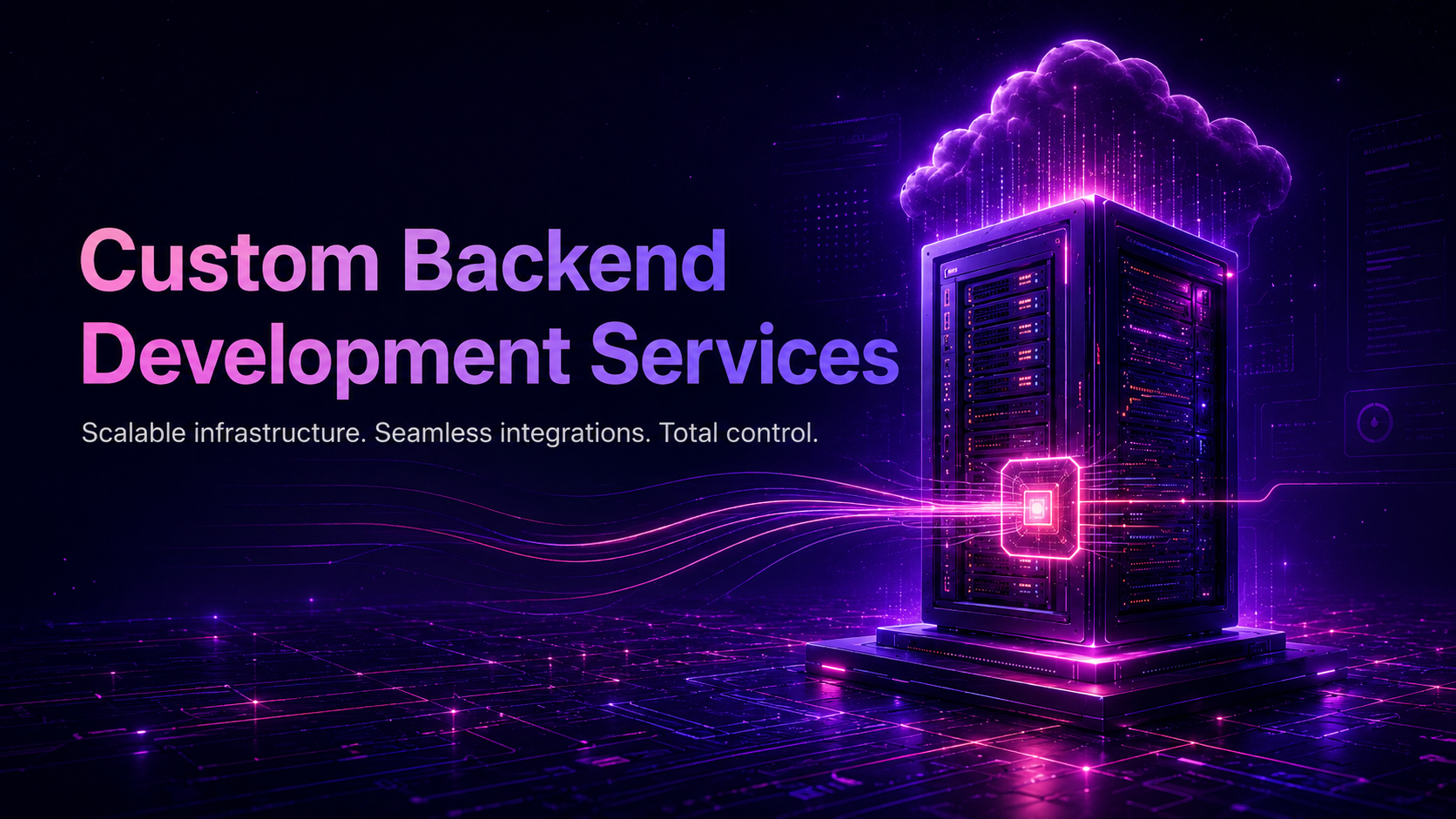
Off-the-shelf solutions rarely meet unique business requirements. Custom backend development services create infrastructure tailored precisely to your operational needs, growth plans, and technical environment — turning your backend into a competitive advantage rather than a constraint.
Tailored business logic
Custom development implements your specific workflows, business rules, and data structures without the compromises generic platforms force. The system fits how your business actually operates.
Scalability for growth
Custom backends are architected for your growth trajectory — whether you're handling 100 users today or planning for millions. Good architecture decisions early prevent costly rebuilds later.
Seamless integration
Your backend connects with CRM platforms, payment processors, inventory management, and analytics tools — eliminating data silos and workflow bottlenecks across your entire stack.
Total control
You own the codebase and control the roadmap. No dependence on third-party vendors for critical updates, no waiting for features your business needs — strategic flexibility as markets evolve.
What technologies do backend development services use?
Professional backend development services work with diverse technology stacks, selecting tools that match your specific requirements rather than forcing predetermined solutions. Here's how the common choices map to use cases.
| Category | Options | Best for |
|---|---|---|
| Languages | OptionsNode.js, Java, Python, PHP, Ruby | Best forNode.js for real-time & microservices; Java for enterprise reliability; Python for rapid dev & data; PHP for mature web ecosystems; Ruby for fast prototyping |
| Databases | OptionsPostgreSQL, MySQL, MongoDB, Redis | Best forPostgreSQL for advanced relational; MySQL for proven web reliability; MongoDB for flexible document data; Redis for caching & sessions |
| Cloud | OptionsAWS, Azure, Google Cloud | Best forAWS for the broadest service portfolio; Azure for Microsoft ecosystems; GCP for data analytics & ML |
| Frameworks | OptionsExpress, Spring, Django, Laravel | Best forMature patterns, built-in security, and development efficiency for each respective language |
How much do backend development services cost?
Backend development costs depend on project complexity, technology requirements, team composition, and engagement model — whether you need to hire one or two backend developers or build out a full system.
Hourly rate ranges by region
Asia ranges from $15–35/hr with varying quality levels. Eastern Europe is the common sweet spot for experienced backend developers at competitive rates.
Project-based pricing
| Project type | Typical range |
|---|---|
| Simple API development | Range$5,000–15,000 |
| Medium-complexity backend | Range$20,000–50,000 |
| Enterprise-scale architecture | Range$75,000–200,000+ |
Complexity factors include database architecture sophistication, third-party integration requirements, security and compliance needs, expected user scale, and real-time processing requirements.
Backend systems need continuous attention beyond initial build — budget 15–20% of development cost annually for maintenance, monitoring, security updates, and scaling. The upfront investment is significant, but custom development avoids recurring license fees, eliminates platform-limitation workarounds, and reduces technical debt. Many companies find custom backend development pays for itself within 18–24 months through operational efficiencies.
How do you choose backend development services?
Selecting the right partner determines project success. Evaluate potential providers across these dimensions.
Technical expertise
Review experience with your required stack, ask about similar projects, request code samples or GitHub profiles, and verify understanding of security, database optimization, and scalable architecture.
Portfolio & case studies
Examine past projects similar to yours for evidence of handling scale, complexity, and integration. Testimonials reveal communication, deadline management, and post-launch support. Integrated QA testing prevents costly production bugs.
Communication & PM
Evaluate clarity, responsiveness, and proactive problem-solving early. Understand their methodology — Agile typically gives better flexibility and feedback loops. For distributed teams, confirm sufficient timezone overlap.
Security & compliance
Verify secure coding, proper authentication/authorization, encryption in transit and at rest, and regular audits. For regulated industries, confirm HIPAA, PCI DSS, or GDPR experience as relevant.
Support & maintenance
Clarify post-launch arrangements: who handles bug fixes, response times for critical issues, and how feature requests are prioritized. Understanding ongoing support prevents unpleasant surprises after launch.
What industries benefit from custom backend development?
Fintech & financial services
Banking, payment processing, and investment platforms need secure, reliable infrastructure for complex financial calculations, regulatory compliance, and audit trails.
E-commerce & retail
Backends managing inventory, orders, fulfillment, and payment gateways — handling unique pricing rules, promotional logic, and multi-channel sales coordination.
Healthcare & telemedicine
HIPAA-compliant backends for patient records, scheduling, prescriptions, and provider communication with specialized workflows and security.
SaaS platforms
The entire product runs on the backend — multi-tenant architectures, subscription management, usage metering, and API platforms.
Gaming & entertainment
Real-time multiplayer interactions, player progress, in-game purchases, and content delivery — optimized for low latency and high concurrency.
Build a backend that fits your business
Tell us what you're building and we'll map the right architecture, stack, and team for it.
About CleverixWe are a Sofia-based software engineering and QA company helping product teams build, test, and maintain complex digital systems. Our Bulgaria-based teams deliver European quality standards at competitive nearshore rates across backend, application, and QA engagements. www.cleverix.com
Frequently asked questions
How long does backend development take?
Timelines vary by scope. Simple API development completes in 4–8 weeks. Medium-complexity systems take 3–6 months. Enterprise-scale architectures can run 6–12 months or longer. Agile approaches deliver working functionality incrementally rather than waiting for full system delivery.
Can you integrate with our existing systems?
Yes — integration is a core part of professional backend development. Whether connecting to legacy databases, third-party APIs, or cloud services, experienced teams architect integration layers that ensure reliable data flow and system interoperability.
Do you provide backend development for mobile apps?
Yes. Mobile backends typically include user authentication, data synchronization, push notifications, and cloud storage — all accessible through RESTful APIs or GraphQL endpoints.
What's included in ongoing support?
Comprehensive support covers bug fixes and patches, security updates, performance monitoring and optimization, infrastructure scaling, database maintenance, and backup management. SLAs define response times and coverage hours matching your business requirements.